

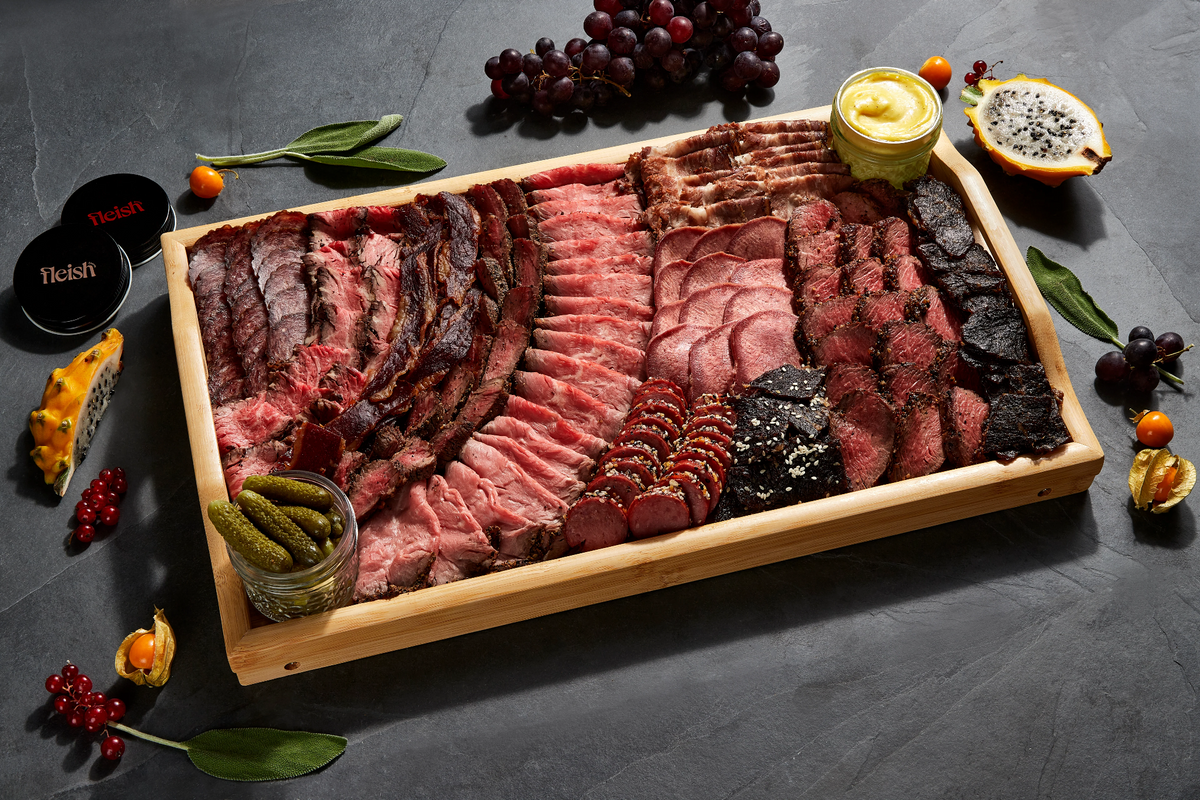
When comparing a meat board vs charcuterie board, the two terms can appear interchangeable at first. Both can feature an assortment of prepared meats arranged with complementary foods, but there are differences in terminology, ingredients, presentation, and dietary considerations.
The distinction becomes particularly important for people who follow kosher dietary laws. A traditional charcuterie board may contain ingredients that are not suitable for a kosher meat meal, such as dairy-based cheese. A kosher meat board, on the other hand, is prepared with ingredients and practices that follow applicable kosher requirements.
What Is a Meat Board?
A meat board is a serving board or platter featuring a selection of meats arranged together for sharing. The term is relatively broad. A meat board may include different types of cooked, smoked, cured, or otherwise prepared meats, depending on the style and purpose of the board.
Accompaniments can include vegetables, fruit, pickles, crackers, bread, condiments, and other suitable foods. A meat board can be designed for a casual snack or a more formal event. Its size and ingredients usually depend on the number of guests and how the food will be served.
What Can a Meat Board Include?
A typical meat board can contain several meat selections alongside complementary ingredients.
Examples may include:
-
Sliced roast beef
-
Cured or smoked meats
-
Pastrami-style meats
-
Other prepared meat selections
-
Pickles and olives
-
Fresh or dried fruit
-
Vegetables
-
Crackers or bread
-
Mustard and other condiments
The exact combination depends on the provider and the intended style of the board.
What Is a Charcuterie Board?
Charcuterie is a French culinary term traditionally associated with prepared and preserved meat products. Modern charcuterie boards have expanded beyond their traditional definition. They commonly feature cured meats alongside cheeses, crackers, fruits, nuts, spreads, and other accompaniments.
The presentation is often designed around variety. Different meats and supporting ingredients are arranged together to create a board that is both visually appealing and easy to share. However, not every ingredient traditionally associated with charcuterie is appropriate for every dietary requirement.
Meat Board vs Charcuterie Board: The Main Difference
The main difference between a meat board vs charcuterie board is how broadly the terms are used. A meat board focuses primarily on meat and suitable accompaniments. Charcuterie traditionally refers to prepared meats but has evolved into a broader style of platter that often includes cheese and other foods.
For shoppers, the actual contents of the board matter more than the name.
A product described as a charcuterie board could contain several ingredients that do not fit a kosher meat meal. A meat board may be specifically designed around kosher requirements and therefore use different accompaniments.
What Makes a Board Kosher?
For consumers who follow kosher dietary laws, the ingredients are only one part of the consideration.
Kosher food must meet applicable requirements related to the types of animals permitted, preparation, processing, ingredients, and handling.
This means a kosher meat board should be prepared using appropriate kosher meat and suitable accompanying foods.
Kosher Meat
The meats used must meet applicable kosher requirements. Beef and poultry are common examples of meats that can be included when properly sourced and prepared.
Consumers may look for recognized kosher certification when purchasing prepared products.
Meat and Dairy
One of the most important differences between a conventional charcuterie board and a kosher meat board is the treatment of meat and dairy.
Kosher dietary laws prohibit combining meat and dairy. As a result, a kosher meat board would not normally include traditional dairy cheese alongside meat. Instead, the board can use non-dairy ingredients to provide variety and contrast.
What Are Kosher Charcuterie Alternatives?
People looking for a kosher alternative to traditional charcuterie do not have to give up variety. A kosher board can combine different meats with plant-based ingredients to create contrasting flavors, textures, and colors.
Pickles and Olives
Pickles and olives can provide acidity and saltiness that complement rich meat selections. They can also help break up the appearance of a board and provide easy-to-serve options.
Fresh and Dried Fruit
Fruit can add natural sweetness to a savory board. Grapes, berries, figs, dates, and dried apricots are examples of ingredients that can complement different meat selections when prepared according to applicable kosher requirements.
Vegetables
Fresh vegetables can provide crunch and freshness. Cucumbers, tomatoes, peppers, radishes, and other suitable vegetables can be arranged alongside meat to create additional variety.
Crackers and Bread
Crackers and bread can provide a neutral base for meat and condiments. When serving a kosher meat board, these products should also be appropriate for the specific meal and kosher standards being followed.
How Does Presentation Differ?
Both meat boards and charcuterie boards can be presented creatively, but traditional charcuterie often emphasizes a broad mixture of ingredients. A meat board can place greater visual emphasis on the meat itself.
Meat-Focused Arrangement
Meats can be folded, rolled, layered, or arranged into sections. Different cuts and textures can be grouped together so guests can easily identify their choices.
Supporting Ingredients
Fruit, vegetables, pickles, crackers, and condiments can then be placed around the meat. These ingredients can provide color and texture while keeping the board easy to navigate.
Practical Serving
Presentation should not come at the expense of usability. Guests should be able to pick up individual portions without disturbing the entire board. For larger events, multiple boards can sometimes be more practical than one oversized platter.
Which Is Better for a Party?
There is no universal answer to whether a meat board or charcuterie board is better for a party. The right option depends on the guests, dietary requirements, type of event, and other food being served.
For Conventional Gatherings
A traditional charcuterie board may work well when guests enjoy a mixture of meats, cheeses, and other ingredients. However, hosts should consider allergies and dietary restrictions before serving a mixed board.
For Kosher Gatherings
A kosher meat board can be a more suitable option when guests follow kosher dietary laws. It allows the host to offer a variety of meat selections and complementary foods while taking the requirements of the meal into account.
Fleish Boards focuses on kosher meat boards designed for sharing, making this format an option for hosts looking for a meat-focused alternative to conventional charcuterie.
Meat Platter vs Charcuterie: Which Should You Choose?
When comparing a meat platter vs charcuterie, start with the needs of your guests. If you want a broad selection that traditionally includes meats and cheese, a conventional charcuterie board may be suitable.
If the gathering requires kosher food or you simply want a board focused primarily on meat, a kosher meat platter may be a better fit.
Consider Your Guests
Guest preferences should influence the selection. For a mixed group, consider whether anyone follows kosher dietary requirements or has food allergies or other restrictions.
Consider the Occasion
A small gathering may need a simple board, while a larger celebration may require multiple boards. Corporate events, holidays, birthdays, family celebrations, and casual gatherings can all use shared food boards, but the quantity and presentation may differ.
Consider the Rest of the Menu
If there are several appetizers and main dishes, the board may serve primarily as a starter. If the event has a casual buffet-style menu, the meat board may need to provide a larger portion of the overall food.
Why Choose a Kosher Meat Board From Fleish Boards?
Fleish Boards offers meat-focused boards prepared for kosher consumers and designed for sharing. The boards can provide an alternative to traditional charcuterie while focusing on kosher meat selections and suitable accompaniments.
For hosts planning a kosher gathering, a prepared board can also simplify food presentation. Instead of sourcing and arranging several individual meat products, a complete board can provide a coordinated selection. The appropriate choice will depend on the event, number of guests, desired variety, and specific kosher requirements.
Understanding the Difference Before You Choose
The difference between a meat board vs charcuterie board largely comes down to terminology, ingredients, and the way each board is prepared and served.
Traditional charcuterie can combine cured meats with cheese and other foods, while a kosher meat board focuses on kosher meat and suitable non-dairy accompaniments. For people following kosher dietary laws, understanding these differences is important when choosing food for an event.
Fleish Boards provides kosher meat board options that offer a meat-focused alternative to conventional charcuterie. By checking the ingredients, certification, serving size, and preparation details, shoppers can choose a board that fits their dietary requirements and the occasion.
Frequently Asked Questions
1. What is the difference between a meat board and a charcuterie board?
A meat board generally focuses on meat and suitable accompaniments, while a traditional charcuterie board often combines cured meats with cheese, crackers, fruit, and other foods. The exact contents can vary.
2. Can a charcuterie board be kosher?
Yes. A charcuterie-style board can be prepared using kosher-certified meats and suitable non-dairy accompaniments. The ingredients and preparation must meet the applicable kosher requirements.
3. Can a kosher meat board include cheese?
A kosher meat board does not combine meat and dairy. Traditional dairy cheese would therefore not normally be included on a meat board.
4. What is a kosher charcuterie board?
A kosher charcuterie board is a charcuterie-style selection prepared according to kosher dietary requirements. It may include kosher meats along with non-dairy accompaniments such as fruit, vegetables, pickles, crackers, and condiments.
5. What are good alternatives to cheese on a kosher meat board?
Suitable alternatives can include vegetables, fruit, pickles, olives, crackers, bread, mustard, horseradish, and other appropriate non-dairy foods.
6. Is a meat platter the same as a charcuterie board?
Not necessarily. The terms can overlap, but a meat platter may focus primarily on meat, while charcuterie commonly includes a wider range of ingredients and may traditionally feature cheese.


