

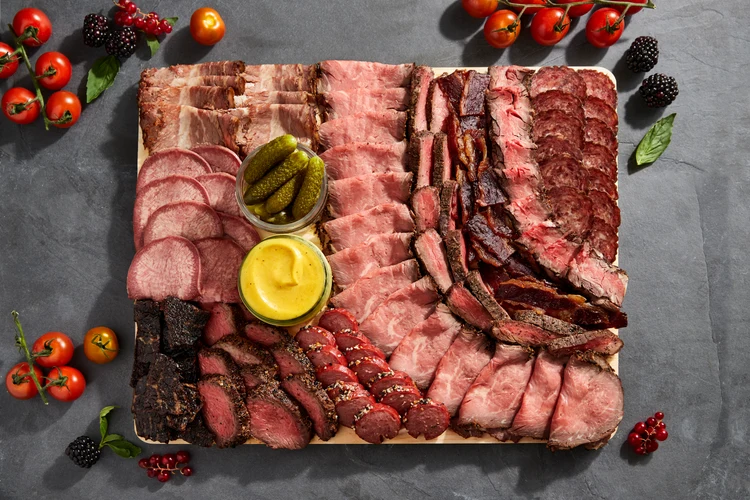
A kosher meat board is a thoughtfully arranged selection of kosher meats and complementary foods served together on a board or platter. It can be prepared for Shabbat, holidays, celebrations, family gatherings, corporate events, or casual entertaining.
While meat boards have become popular for their presentation and variety, a kosher meat board follows the requirements of kosher dietary law. This affects which meats and ingredients can be used, how they are prepared, and which foods can be served alongside them.
A well-planned board can combine different textures, flavors, and serving styles while keeping the ingredients appropriate for a kosher meal. Fleish Boards creates meat-focused boards designed around kosher standards, offering options that can be served at different types of gatherings.
What Is a Kosher Meat Board?
A kosher meat board is a platter or board featuring a selection of kosher meats along with suitable accompaniments. The meats may include cooked, cured, smoked, or otherwise prepared options, depending on the board.
The term "kosher" refers to food that complies with Jewish dietary laws, known as kashrut. For a meat board to be kosher, the meat and other ingredients need to meet the relevant kosher requirements.
What Makes a Meat Board Kosher?
Several factors determine whether a meat board is kosher. The ingredients themselves are important, but preparation and certification can also matter.
Kosher Meat
The meat used on the board must come from animals permitted under kosher dietary laws and must be prepared according to applicable kosher requirements. Common examples of kosher meats can include beef and poultry. The exact products used will depend on the specific board and the kosher standards followed.
For consumers who observe kosher dietary laws, checking the kosher certification of packaged or prepared products can help confirm that the ingredients meet their requirements.
Kosher Preparation
Kosher food preparation involves more than selecting an appropriate type of meat. Preparation, cooking, equipment, and handling can all be relevant.
For this reason, consumers may look for boards prepared in a kosher-certified environment or by a provider that follows appropriate kosher procedures.
Appropriate Accompaniments
Everything placed on a meat board should be suitable for the type of kosher meal being served. Traditional dairy products such as cheese and butter are generally not paired with meat on a kosher meat board because of the prohibition against mixing meat and dairy.
This is one of the key differences between a kosher meat board and many conventional charcuterie boards.
What Does a Kosher Meat Board Include?
There is no single required list of ingredients for a kosher meat board. The contents can vary according to the occasion, style of board, and preferences of the people being served.
Cured and Prepared Meats
Depending on the selection, a kosher meat board may feature thinly sliced or prepared meats that provide different flavors and textures.
Examples can include:
-
Beef-based cured meats
-
Smoked meats
-
Sliced roast beef
-
Pastrami-style meats
-
Other kosher-certified meat selections
The exact choices depend on the board and its intended serving style.
Crackers and Breads
Crackers, bread, and similar items can provide a neutral or contrasting base for meats. When creating a kosher meat platter, these products should also be suitable for the meal and meet any applicable kosher requirements.
Different textures can make the board more interesting, particularly when paired with softer meats and spreads.
Pickles and Vegetables
Pickles and vegetables can add acidity, freshness, and texture to a meat board.
Common choices may include:
-
Pickles
-
Olives
-
Cherry tomatoes
-
Cucumbers
-
Peppers
-
Radishes
-
Other suitable vegetables
These ingredients can also add visual variety without relying on dairy products.
Fruits
Fruit can provide natural sweetness that contrasts with savory and salty meats. Fresh or dried fruit can work well depending on the style of the board. Suitable options may include grapes, berries, figs, dates, or dried apricots.
When selecting ingredients, the fruit should be prepared and served according to the applicable kosher requirements.
Dips and Condiments
Condiments can add another layer of flavor to a meat board. Mustard, horseradish, sauces, and other suitable spreads can complement different types of meat.
As with every ingredient, the condiment should meet the appropriate kosher requirements.
How Is a Kosher Meat Board Different From a Charcuterie Board?
The terms meat board and charcuterie board are sometimes used interchangeably, but they do not always describe the same thing.
Traditional charcuterie boards may include meats, cheeses, and other dairy-based foods. A kosher meat board cannot simply combine meat and dairy products in the same meal.
A kosher charcuterie board therefore requires careful ingredient selection and preparation to ensure that all components follow kosher requirements.
Meat and Dairy Considerations
A traditional board might include cured meats alongside cheeses, creamy dips, or other dairy products. A kosher meat board generally uses non-dairy alternatives when serving meat.
This can include plant-based spreads, vegetables, fruits, pickles, and other suitable accompaniments.
Certification Matters
Kosher consumers may also look for reliable kosher certification when selecting prepared foods and packaged ingredients.
Certification can help consumers understand that a product or preparation has been evaluated according to the relevant kosher standards.
Kosher Meat Platter Ideas for Different Occasions
A meat board can be adapted for many types of gatherings. The size, ingredients, and presentation can change depending on the occasion.
Shabbat and Holiday Meals
A meat board can provide an attractive appetizer or starter for a Shabbat or holiday gathering. Smaller boards can work well before a meal, while larger selections can provide food for guests throughout an event.
Family Gatherings
For family gatherings, a board can provide a convenient way to serve several flavors at once. Different meats can be combined with vegetables, fruits, pickles, and crackers so guests can create their own combinations.
Celebrations and Events
Kosher meat boards can also be used for celebrations such as birthdays, anniversaries, engagement parties, and other gatherings. For larger events, multiple boards or larger platters can provide guests with a selection of foods without requiring a formal sit-down meal.
Corporate Events
A carefully prepared meat board can also work for business meetings, office celebrations, client events, and corporate gifting.
When serving a mixed group, it is important to understand dietary requirements and ensure that the food is appropriately labeled and prepared.
How Do You Arrange a Kosher Meat Board?
Presentation can make a significant difference to the overall appearance of a meat board.
Start by placing the larger items first, such as folded or rolled meat portions. Smaller ingredients can then be arranged around them to fill open spaces.
Create Different Sections
Rather than placing everything randomly, organize the board into sections. One area can feature sliced meats, another can contain vegetables or pickles, and another can hold crackers, fruit, or condiments.
Add Variety
A visually appealing board typically includes different shapes, colors, textures, and sizes. For example, thinly sliced meat can be placed beside larger pieces, while round crackers can contrast with irregularly shaped vegetables or fruit.
Keep Ingredients Easy to Serve
Presentation should also remain practical. Guests should be able to pick up the food without disturbing the rest of the board. Small serving utensils, individual containers for dips, and neatly arranged ingredients can make a board easier to share.
What Ingredients Pair Well With Kosher Meat?
The best pairings depend on the specific meat being served, but several categories work well across different boards.
Savory Pairings
Pickles, olives, mustard, horseradish, and suitable vegetables can complement the salty and savory characteristics of cured or roasted meats. These ingredients can also provide acidity that balances richer flavors.
Sweet Pairings
Fruit can provide contrast to savory meats. Grapes, figs, dates, berries, and dried fruits can introduce sweetness without requiring dairy-based ingredients.
Crunchy Pairings
Crackers, toasted bread, nuts, and suitable vegetables can provide contrasting textures. When using nuts or other common allergens, labeling them can be useful when serving a large group.
How Much Meat Should You Include?
The amount of meat required depends on whether the board is being served as an appetizer, snack, or main component of a meal. For an appetizer board, smaller portions may be sufficient because guests will likely be eating other foods afterward.
For a board intended to provide a more substantial meal, more meat and additional accompaniments may be appropriate. The number of guests, length of the event, and availability of other food should all be considered when determining quantities.
Why Choose a Kosher Meat Board?
A kosher meat board can offer both convenience and variety while allowing hosts to serve food that fits kosher dietary requirements. Instead of preparing several separate appetizers, a single board can bring together multiple components in one presentation.
For hosts, this can simplify serving. For guests, it provides the opportunity to choose from several flavors and textures according to their preferences.
Choosing the Right Kosher Meat Board
A kosher meat board can bring together a variety of meats, fresh ingredients, and complementary flavors in a format that works for both casual and formal occasions. The key difference from many traditional meat and charcuterie boards is the attention required to kosher ingredients, preparation, and the separation of meat and dairy.
Fleish Boards offers kosher meat board options for different gatherings, giving hosts a way to incorporate prepared meat selections into their event while considering presentation, variety, and kosher requirements.
Frequently Asked Questions
1. What is a kosher meat board?
A kosher meat board is a selection of kosher meats served with suitable accompaniments such as vegetables, fruits, pickles, crackers, and non-dairy condiments. All ingredients and preparation methods should comply with applicable kosher requirements.
2. What meat can be included on a kosher meat board?
Kosher meat boards can include kosher-certified beef and poultry products, along with other permitted meats prepared according to kosher requirements. The exact selection depends on the board and certification.
3. Can a kosher meat board include cheese?
A meat board prepared according to kosher dietary laws does not combine meat and dairy. Therefore, traditional dairy cheese would not normally be included on a kosher meat board.
4. What can I serve with a kosher meat platter?
Suitable pairings can include pickles, olives, vegetables, fruit, crackers, bread, mustard, horseradish, and other appropriate non-dairy accompaniments.
5. Is a kosher charcuterie board the same as a kosher meat board?
The terms can overlap, but a kosher charcuterie board must follow kosher dietary requirements. Unlike many traditional charcuterie boards, a kosher meat board cannot combine meat and dairy products.
6. Are kosher meat boards suitable for parties?
Yes. Kosher meat boards can work for family gatherings, holidays, celebrations, corporate events, and other occasions. The size and selection can be adjusted according to the number of guests and type of event.
7. How should I arrange a kosher meat board?
Start with the larger meat selections and then add crackers, vegetables, fruit, pickles, and condiments around them. Grouping similar ingredients together can make the board easier to serve and visually organized.
8. How do I know whether a meat board is kosher?
Look for information about the kosher certification and preparation of the board. If you follow a specific kosher standard, confirm that the certification and preparation practices meet your requirements.


